2024 | Digital print on archival paper | Print (width x height): 23.6 x 17.7 in. / 60 x 45 cm. | Archival Paper: Hahnemühle Photo Rag, 308 gsm, acid-free | Printer: Canon Pro 560 with Lucia Pigment Inks | Photo: Bâtiment IV, Esch-sur-Alzette
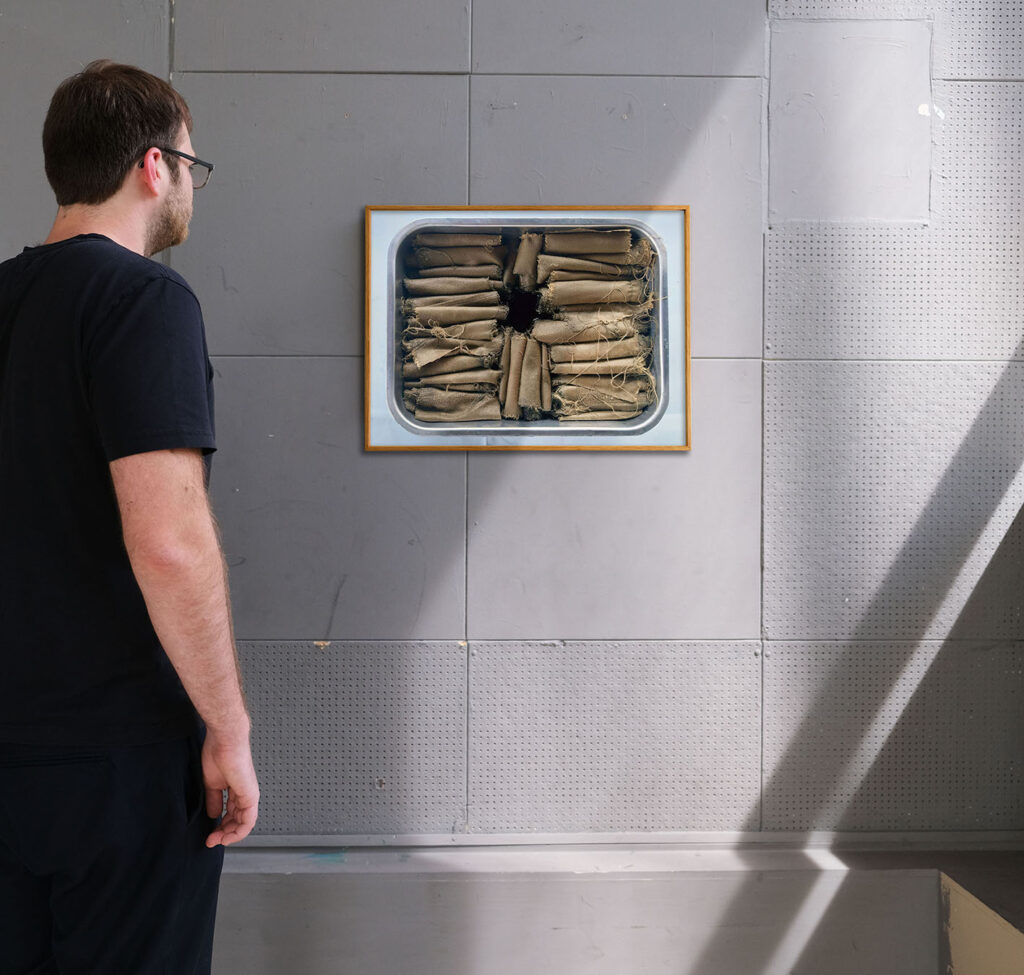
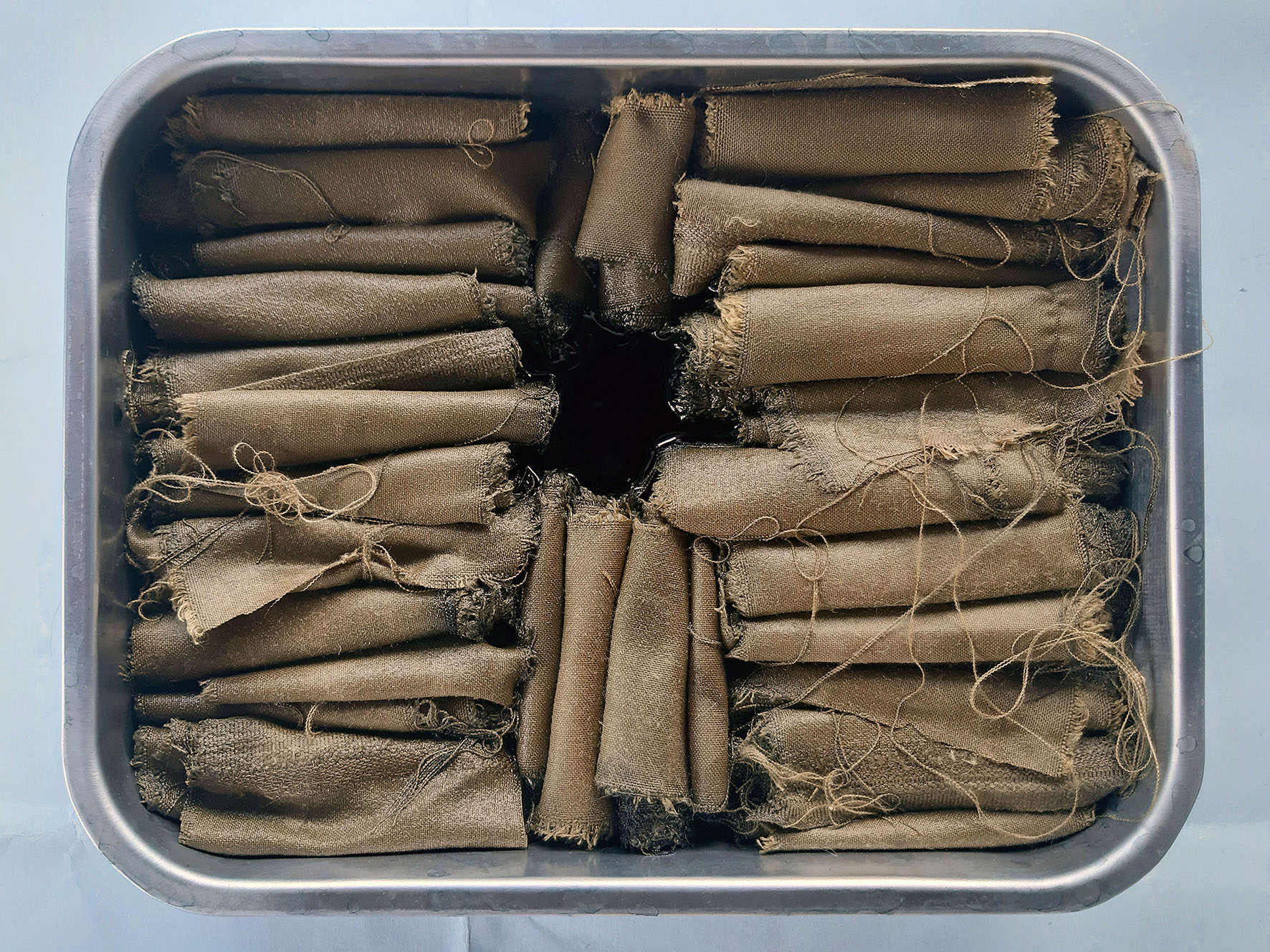
Wounds #2 is a photograph (60 x 45 cm) on archival paper, showcasing tightly squeezed units of khaki fabric, sourced from India and rolled to resemble bandages. Soaked in black liquid, the bandages rest in a stainless steel tray, evoking the clinical precision of a medical setting. Khaki, an unlikely fabric for bandages, reflects the makeshift nature of healing, using what’s at hand to mend and survive. This dark ink-like fluid saturates the frayed threads, highlighting the fabric’s damp texture as a black stain begins to form. While the bandages suggest healing, the spreading dark void reveals a wound that resists closure, an emotional burden that persists with the soldier on the Siachen Glacier. The deep black mark, visible among the bandages, implies that the scar is both the cause and effect of its own containment. The arrangement of the khaki units reflects military discipline, yet trauma and mishaps expose how this order can unravel, revealing the chaos beneath.
Wounds #2 is part of Baptist Coelho’s ongoing multimedia series, Wounds, which explores the physical and psychological scars of soldiers stationed on the Siachen Glacier, one of the harshest places on Earth. It suggests that even deep wounds can heal, though never without challenge. The series draws inspiration from ‘Wounds’, a body of work by Somnath Hore (1921-2006), an Indian sculptor and printmaker, who depicted the harsh realities of suffering caused by famine, war, and conflict. It further resonates with ‘Show Your Wound’ (‘Zeige Deine Wunde’, 1974-75), an installation by German conceptual artist Joseph Beuys (1921-1986), in which the wound becomes a metaphor for mortality, exposure, and unresolved personal and institutional tensions.
Wounds #2 was first exhibited as part of the artist’s solo exhibition, It still hasn’t ended at Bâtiment IV, Esch-sur-Alzette, from 30 May to 14 June 2024. The exhibition was supported by University of Luxembourg, Department of Social Sciences.