2026 | Installation with 6 glass bottles with corks, 1 stainless steel funnel, 1 enamel jug, 1 enamel basin, 1 bar of soap, soapy water, 1 porcelain saucer, 6 towels, 1 camouflage shirt, trousers and cap, 1 belt, 1 pair of socks, 1 pair of leather boots, 6 handwritten notes on paper, 6 clipboards and 1 pencil | Approximate installation (width x depth x height): 55 x 23.5 x 79 in. / 140 x 60 x 200 cm. | Photos: Columbia Global Paris Center
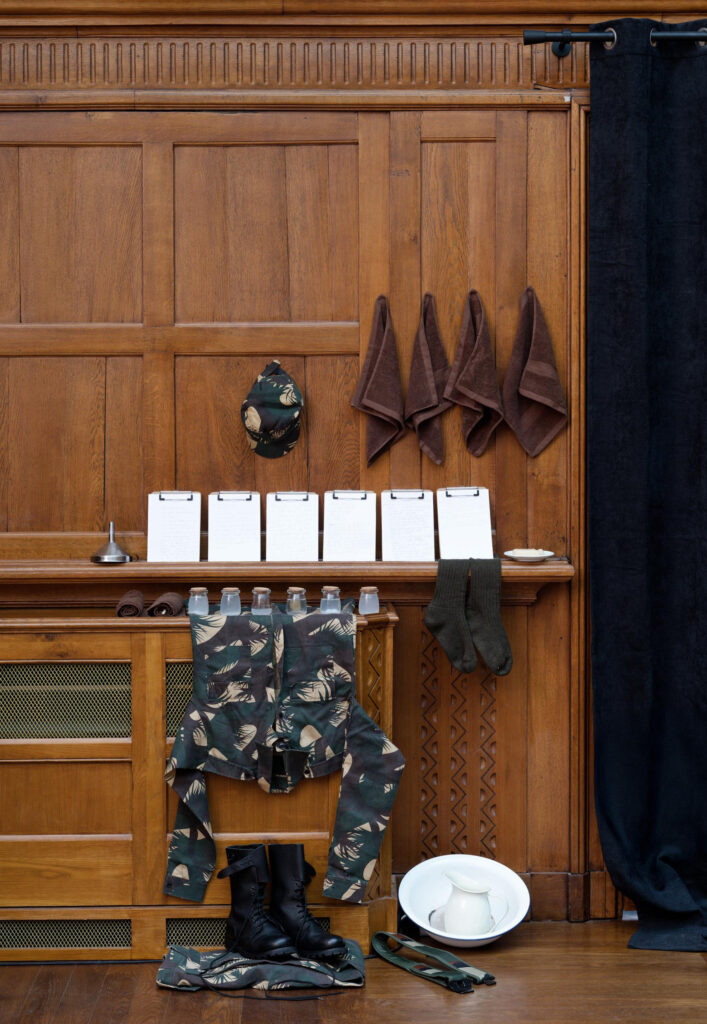
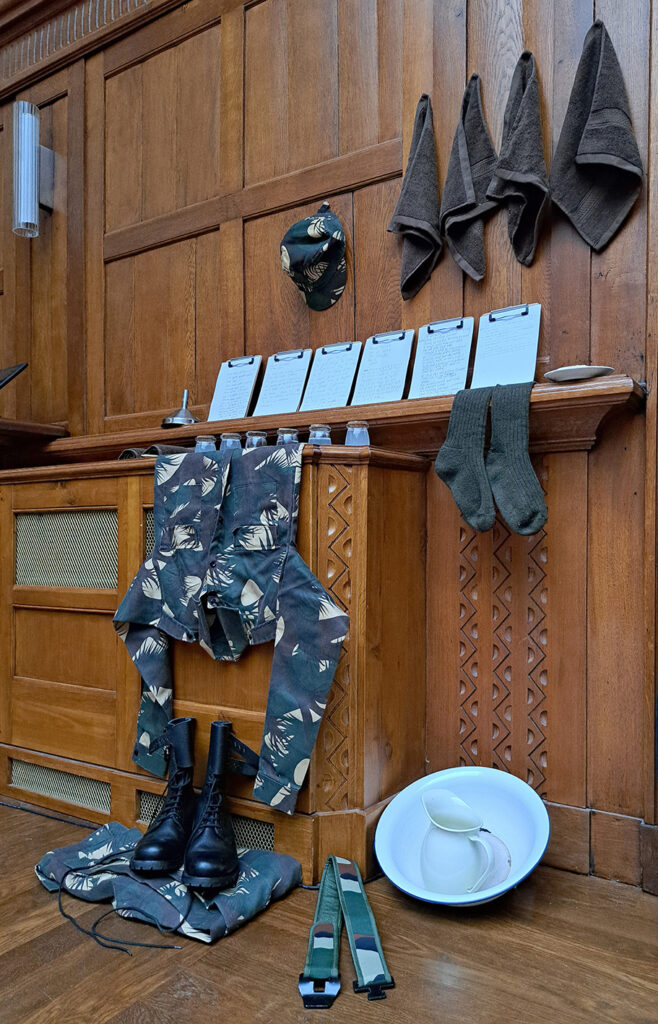
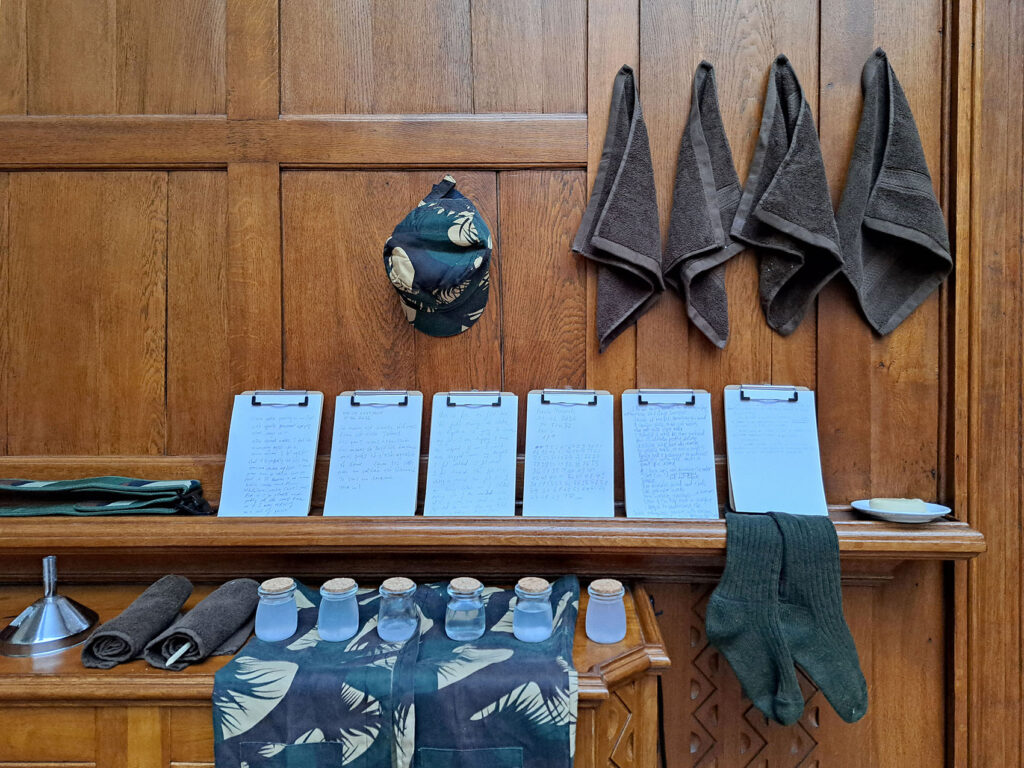
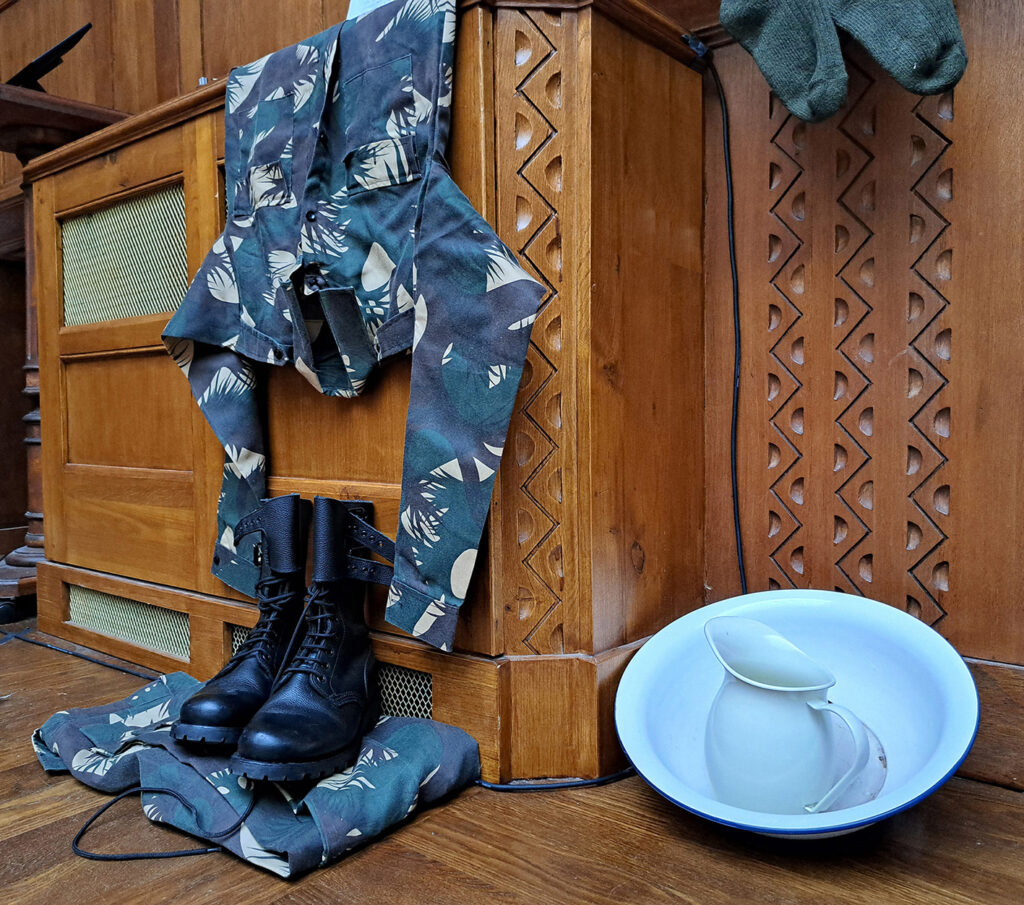
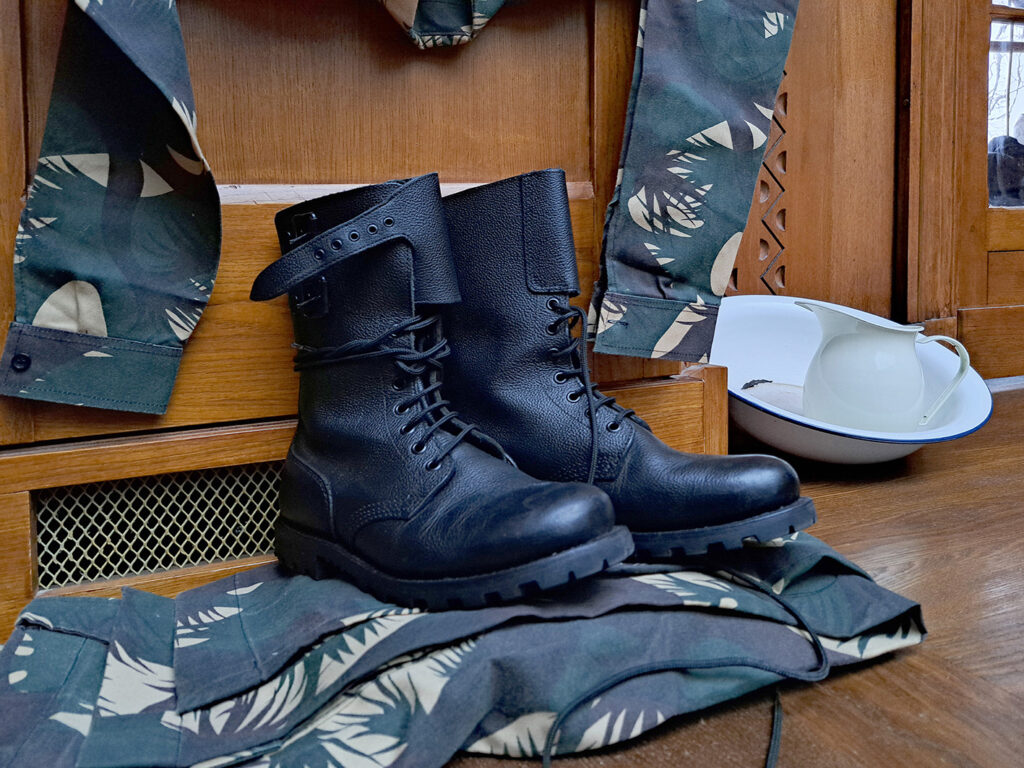
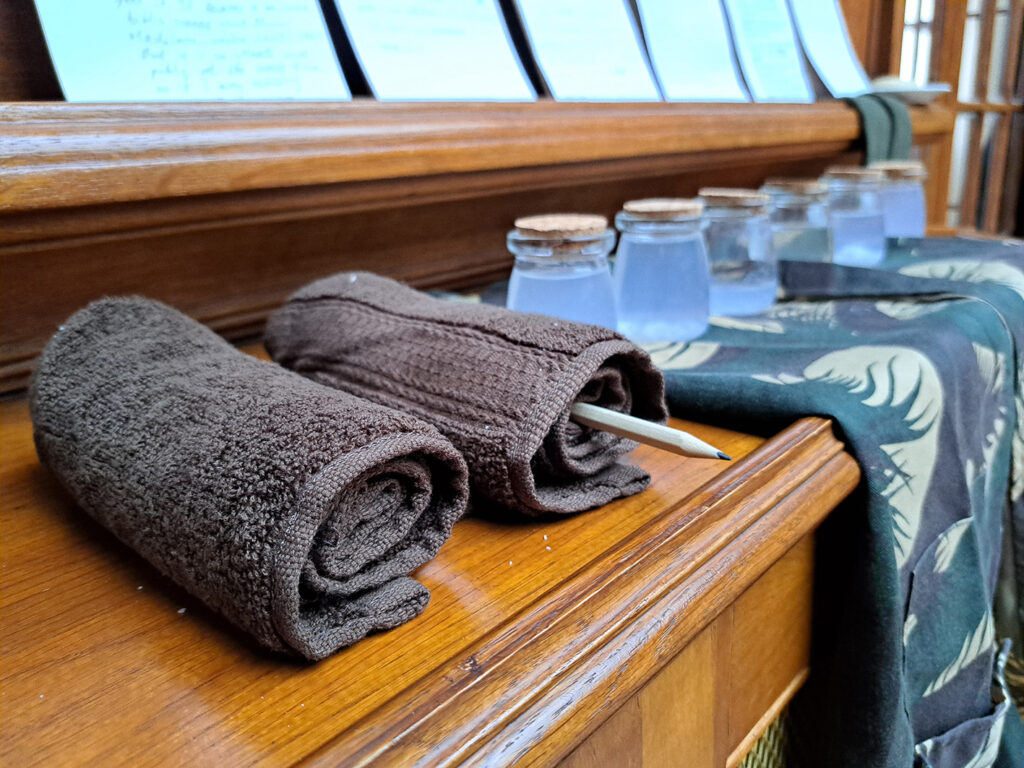
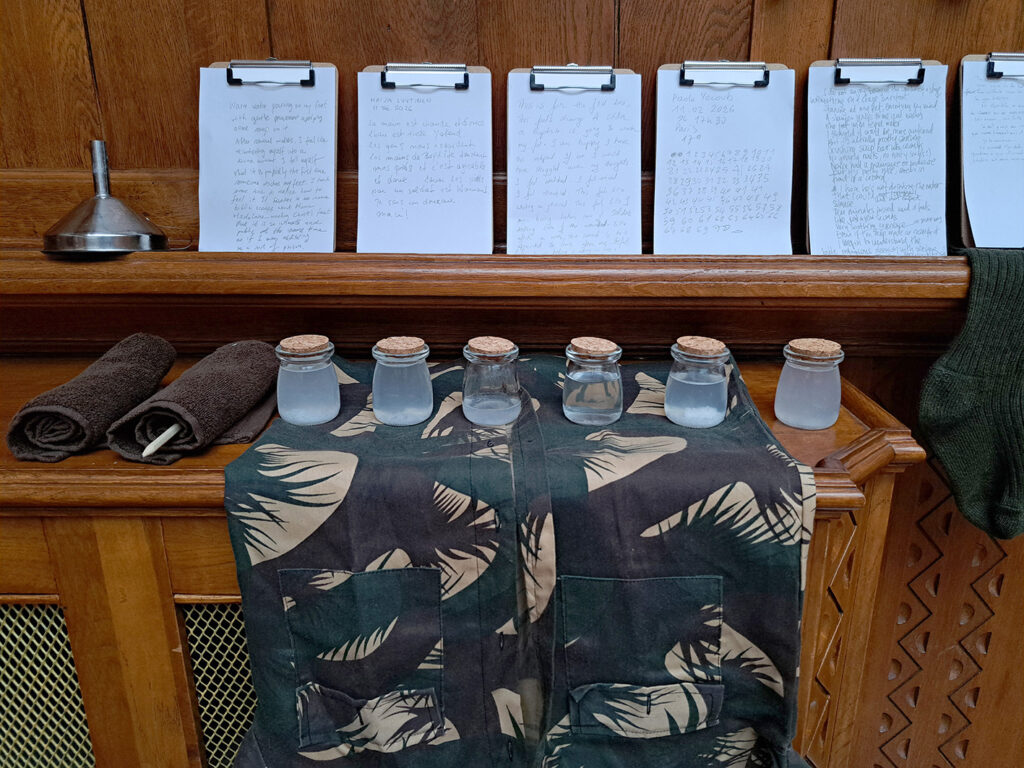
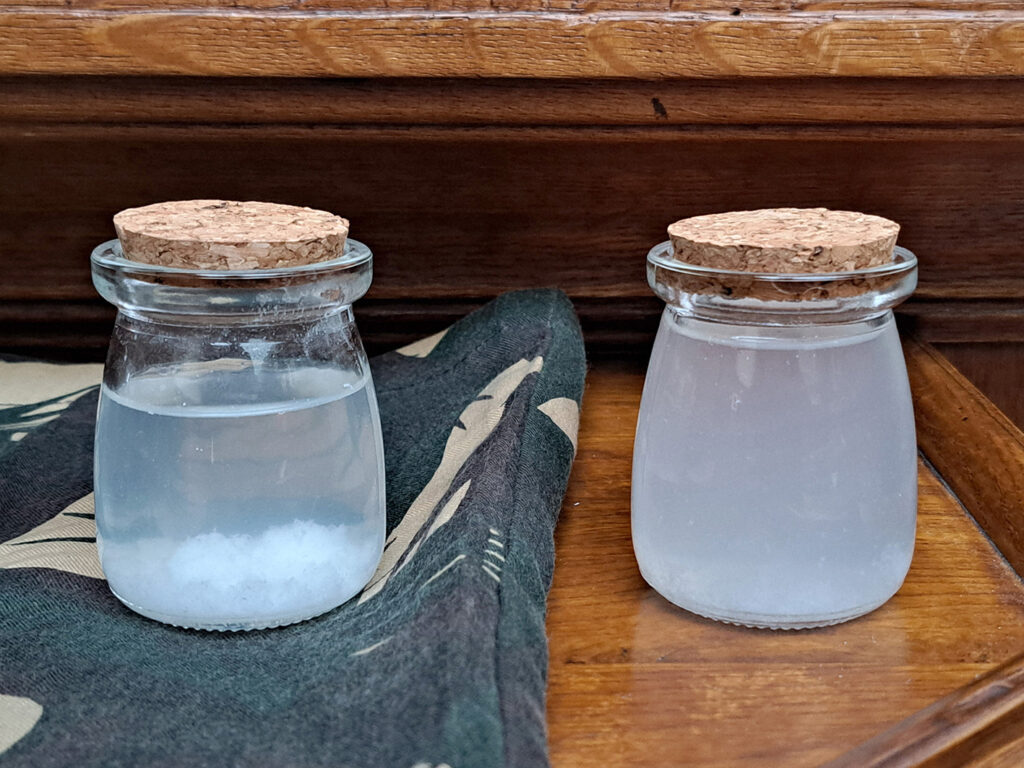
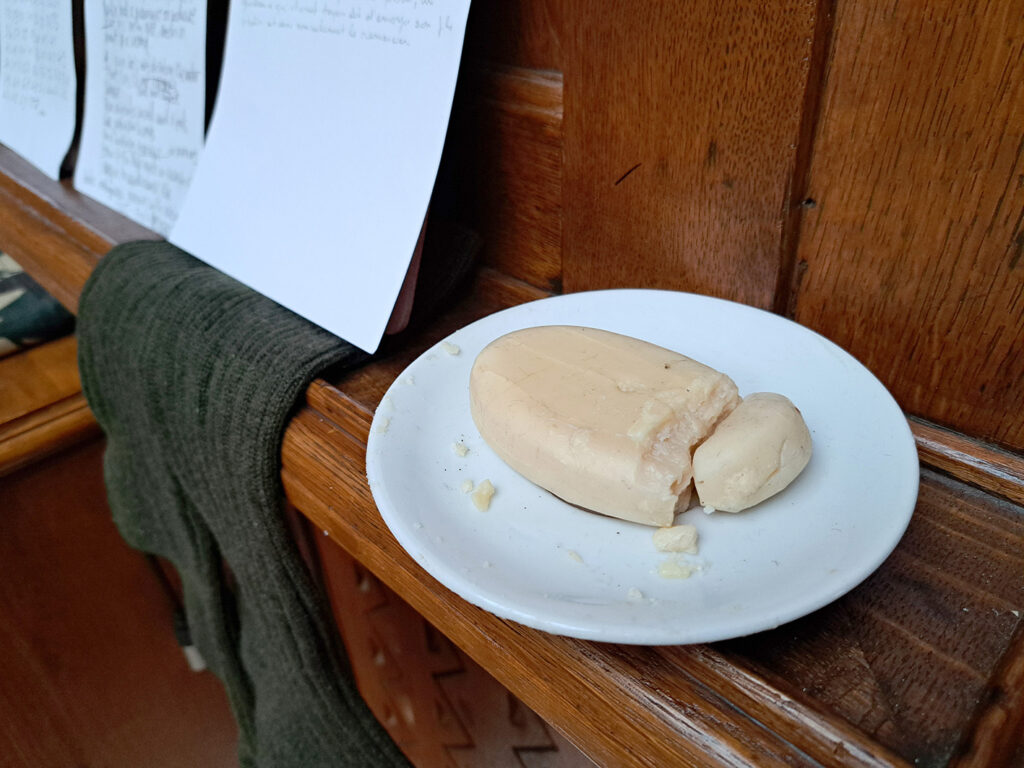
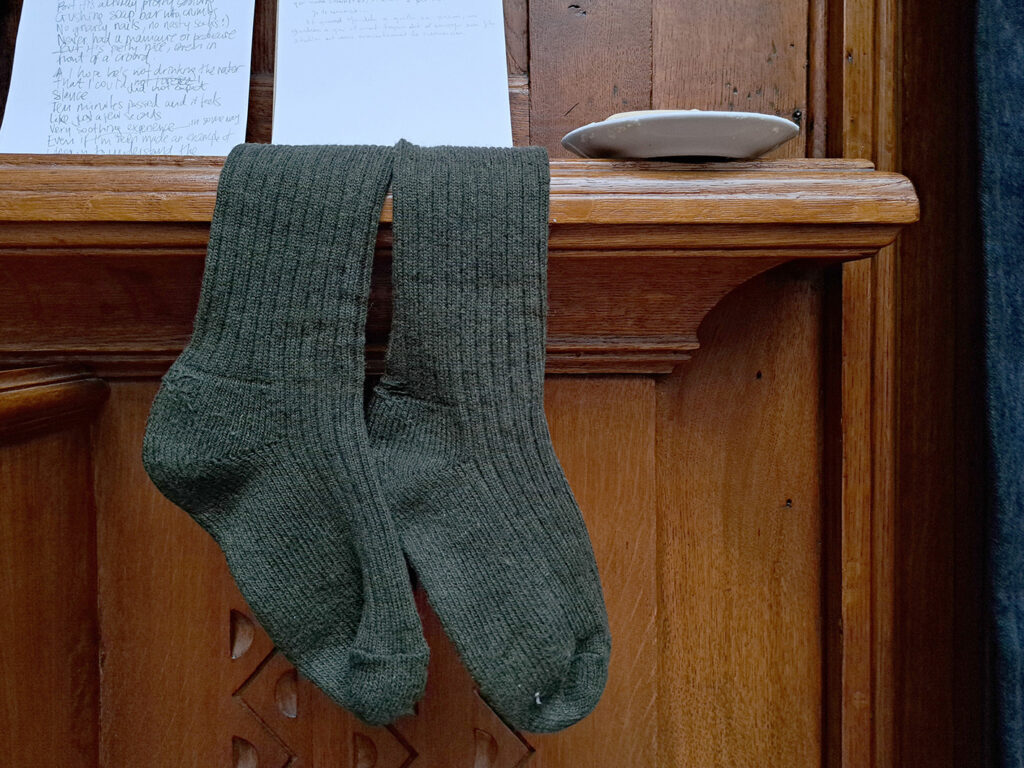
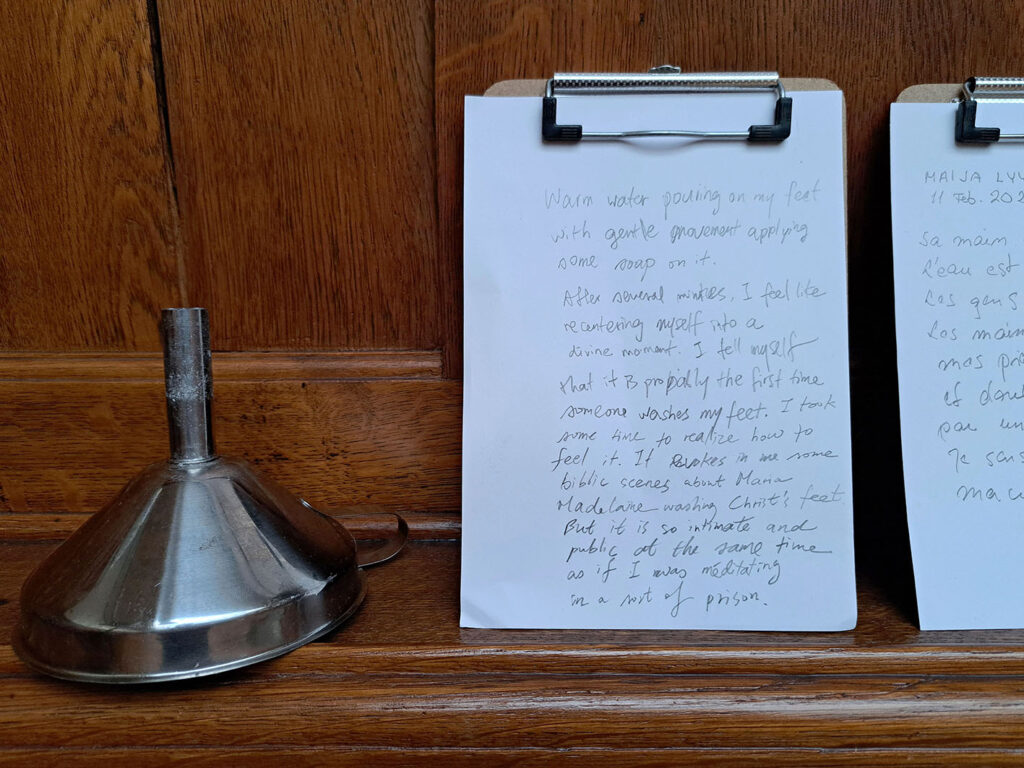
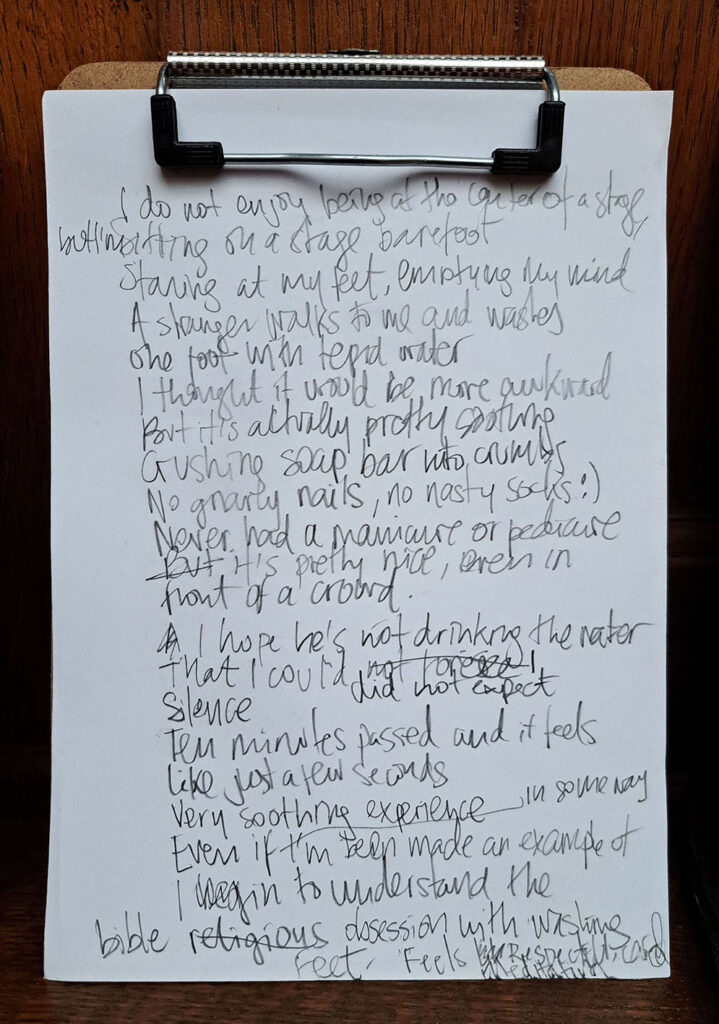
Display #2 (Columbia Global Paris Center) is an installation made up of glass jars filled with soapy water used for washing feet, along with soiled towels and handwritten notes containing the thoughts and personal details of various individuals. It also includes an enamel basin and jug, a bar of soap, a funnel, camouflage uniform, boots, and socks.
All the objects are remnants of an earlier feet-washing performance titled “What have I done to you?” 2011, which inspired this work. The way the installation is presented resembles a war museum display, where objects are removed from their original context and reduced to factual labels. After visiting several war museums in France, Baptist began questioning how documentation can both reveal and conceal information. The clean, clinical vitrines give the objects a sense of authority, shaped by expert interpretation and bias.
The installation also pays tribute to the often-forgotten contributions of Indian and other colonial troops during the World Wars. By placing everyday objects in a museum-like setting, the artist gives them historical weight and questions how value and meaning are constructed. The jars, notes, and military uniform items invite viewers to reflect on their origins and significance, and on how history is remembered, disturbed, and reshaped over time.
Display #2 (Columbia Global Paris Center) is part of Baptist Coelho’s ongoing multimedia series Display, which explores how objects and archives are reframed in institutional displays, questioning how museums construct narratives about history and the present. Display #1 (Battersea Park – London), 2011-12 is also part of the series.