2022 | Collage with pencil drawing on sandpaper and paper, gauze bandages, crepe bandage, ink, aluminium, nails, metal wire, acrylic paint, corrugated cardboard, foam board, plywood and glue | Display (width x depth x height): 14.5 x 1.9 x 12.2 in. / 37 x 5 x 31 cm. | Photos: Isaac Lythgoe; Fondation Fiminco, Romainville
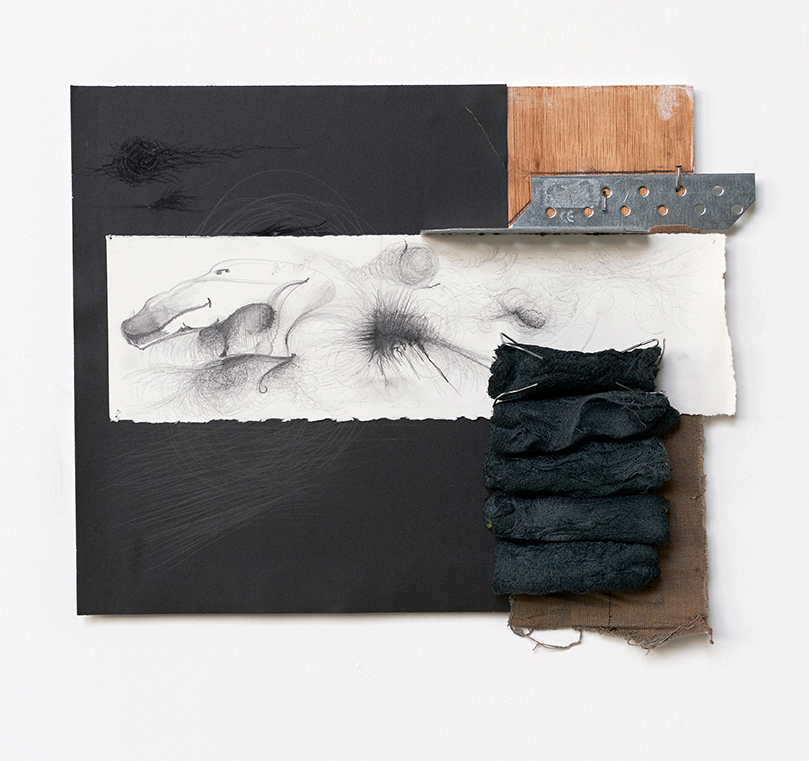
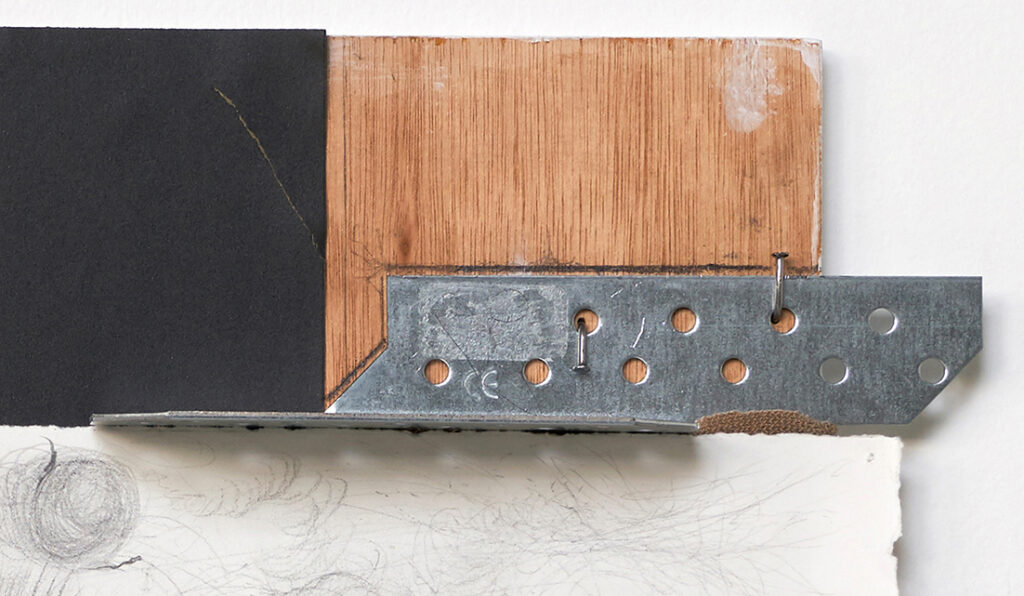
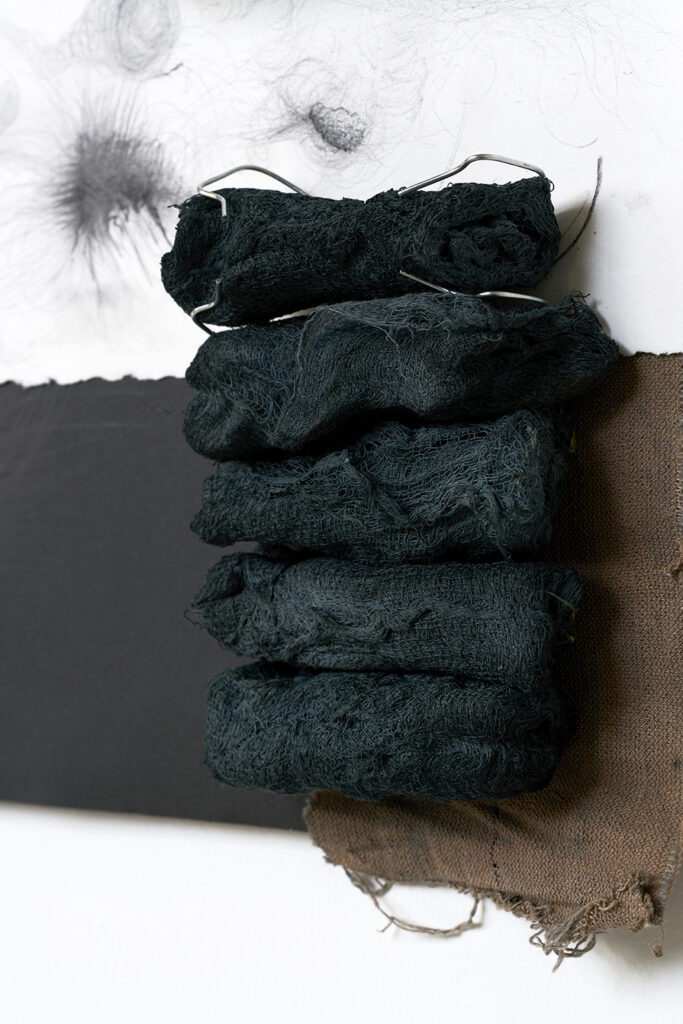
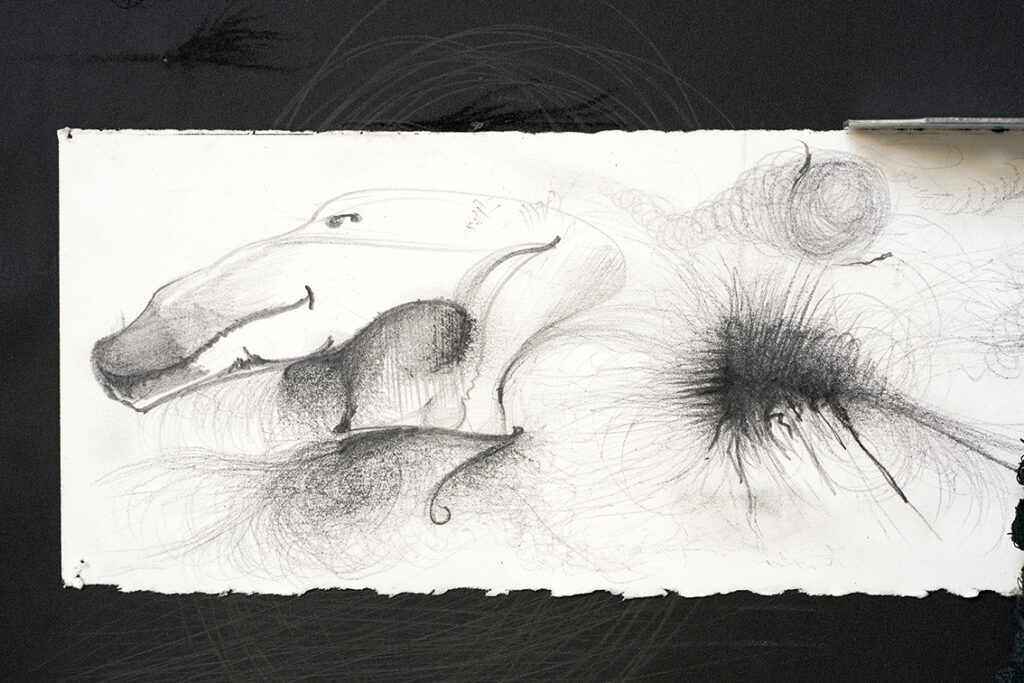
This mixed-media collage is inspired by a brief letter possibly written in Urdu by an Indian soldier, Havildar Ghufran Khan (Afridi) to his friend. The letter possibly dated mid-April 1915, was sent from France to India during the First World War. This letter along with other letters, is part of the book, ‘Indian Voices of the Great War: Soldiers’ Letters, 1914-18’ by David Omissi. The letter describes the appalling conditions in which the soldiers were placed, where the biting ‘lice’ in their clothes were ‘worse than a rifle bullet’. The letter reads, “Our people have many lice in their clothes, and they bite terribly. They are worse than a rifle bullet. But there are no mosquitoes or other creatures which bite mankind, and no snakes or scorpions at all”.
Havildar Ghufran Khan (Afridi) to a friend (India) [Urdu?] [mid-April 1915?], was developed during Baptist Coelho’s year-long Artist-in-Residence, supported by and at Fondation Fiminco, Romainville, 2021-22. The residency was also supported by Fonds de Dotation Buchet Ponsoye, Paris; Institut Français, India. The artwork was first exhibited as part of the group exhibition, Sa mémoire dans la maison vide, souffle comme une brise dans les rideaux blancs at Fondation Fiminco, Romainville, from 2 June to 3 July 2022. The exhibition was curated by Yomna Osman.